
I remember the first time I tried to turn roasted squash into a pasta sauce: it smelled nutty and sweet, but the sauce separated and felt thin. This version of butternut squash pasta fixes that by using two simple tricks—roasting part of the squash to concentrate flavor and cooking the sausage properly so the sauce stays creamy, not greasy—so you get a cozy fall dinner that actually holds together. If you want a balanced weeknight meal that tastes like autumn without a lot of fuss, this recipe delivers.
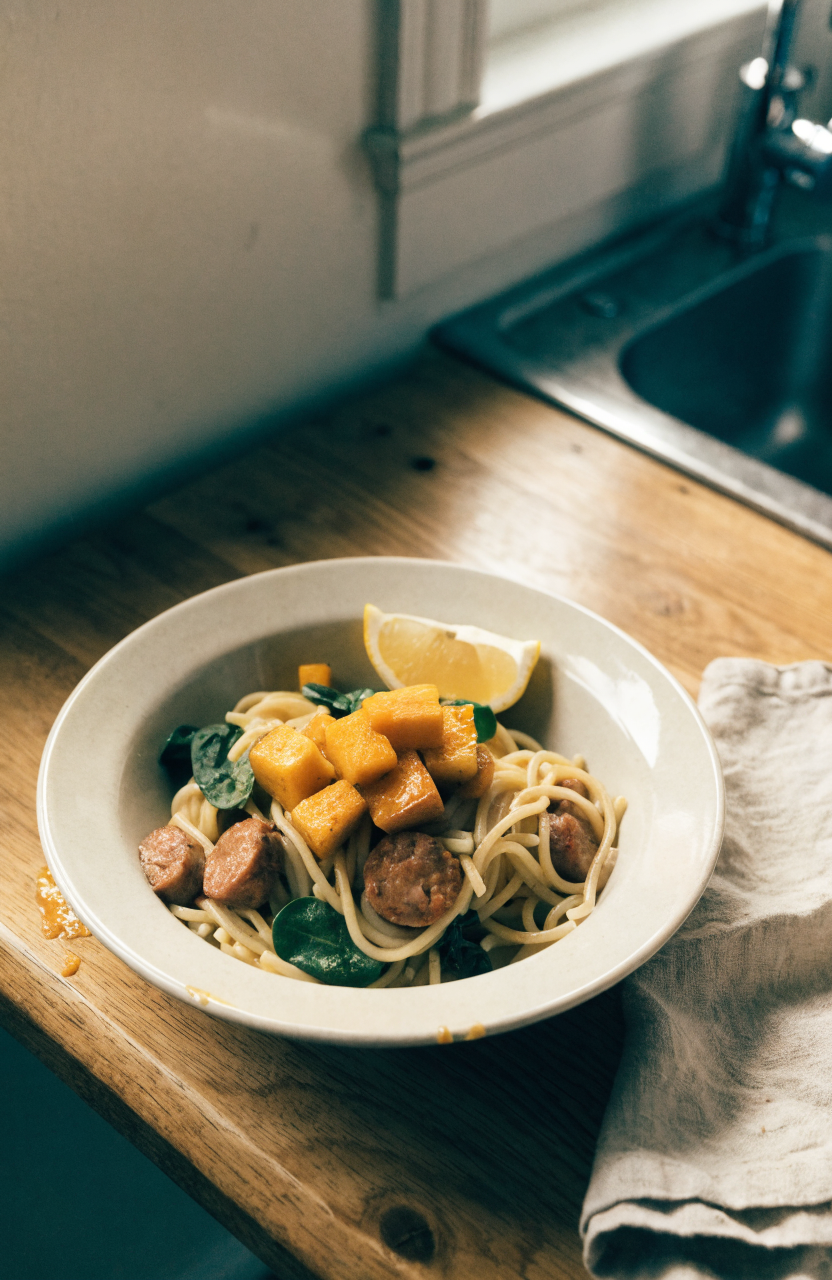
Why this butternut squash pasta works
The technique that makes this butternut squash pasta sing is a two-part squash treatment: I roast half the squash to deepen sweetness and caramelization, and I simmer the other half briefly so there’s enough moisture for blending. Roasting concentrates flavor and reduces excess water, which prevents the sauce from becoming thin. Blending with a small amount of reserved pasta water gives the sauce a silky finish without adding cream. Browning the sausage separately and draining excess fat keeps the dish balanced so the spinach and pasta aren’t overwhelmed.
During testing I found my first attempt turned out bland because I skipped browning the sausage long enough; the final version lets the sausage develop color and fond, which I then deglaze lightly with chicken broth to pull those flavors into the sauce. The result is a well-balanced plate where the squash tastes sweet and savory, the sausage adds savory depth, and the spinach brightens the finish.
Key takeaways
- Roast half the squash to concentrate flavor and reduce watery sauce.
- Brown sausage thoroughly and remove excess fat to avoid a greasy sauce.
- Use reserved pasta water sparingly to achieve a silky consistency instead of adding cream.
- Taste and adjust salt near the end because sausage and broth add sodium.
Ingredients you’ll need and what to substitute
This pasta keeps the ingredient list straightforward: butternut squash, a short pasta like rigatoni or penne to catch the sauce, Italian-style sausage (turkey or chicken recommended), onion, garlic, baby spinach, and low-sodium chicken broth. I roast half the squash while simmering the other half so you get both concentrated flavor and blendable moisture.
Substitutions: If you can’t find sausage you like, use 1 pound of ground turkey or chicken seasoned with 1 teaspoon fennel seeds and 1 teaspoon paprika to mimic the sausage profile. Swap the chicken broth for vegetable broth to keep it fully non-meat. For a dairy-like finish without cream, stir in 2 tablespoons of Greek yogurt after removing the sauce from the heat once it’s slightly cooled (this adds tang and silkiness but will thin the sauce slightly). For a budget option, use frozen butternut squash cubes—thaw and drain, then roast to remove excess water.
Equipment
Essential equipment for this recipe is minimal and standard for most home kitchens.
- Large rimmed sheet pan for roasting (18×13 inch is ideal)
- High-speed blender or immersion blender and a medium saucepan for simmering and blending
- 12-inch skillet for browning sausage and finishing the sauce
- Large pot for boiling pasta (6–8 quarts)
How to make butternut squash pasta
Prepare the squash
Preheat the oven to 425°F. Peel, seed, and cut one medium butternut squash (about 2½ pounds total) in half. Cut one half into 1-inch cubes for roasting and place them on the sheet pan tossed with 1 tablespoon olive oil and a pinch of salt; roast until the edges are caramelized, about 25–30 minutes. Cut the other half into larger chunks and place them in a medium saucepan with 1 cup low-sodium chicken broth and a pinch of salt, bring to a simmer and cook until very tender, about 15 minutes—this makes the squash easy to blend.
Make the squash base
Drain the simmered squash but reserve ½ cup of the cooking liquid. In a blender, combine the simmered squash, 1 cup of the roasted cubes (reserve the rest for texture), 2 tablespoons olive oil, 1 small grated shallot or ¼ cup chopped onion, 2 cloves garlic (roasted or raw, your choice), and ¼ to ½ cup of the reserved cooking liquid; blend until smooth and creamy. You want a thick but pourable sauce—add more reserved liquid or a few tablespoons of pasta water later if needed.
Brown the sausage and aromatics
In the 12-inch skillet over medium-high heat, add 1 tablespoon olive oil and 1 pound sliced or crumbled turkey or chicken sausage (casings removed if using links). Let it brown without stirring for the first 2–3 minutes, then break it up and continue to cook until nicely browned and some fond forms on the pan, about 6–8 minutes total. Transfer the sausage to a plate lined with paper towels and discard excess fat, leaving about 1 tablespoon in the pan. Lower heat to medium, add 1 small diced onion and cook until translucent, 4–5 minutes, then add 2 cloves minced garlic and cook 30 seconds until fragrant.
Bring it together
Return the sausage to the pan, pour in ½ cup low-sodium chicken broth to deglaze, and scrape up the browned bits. Add the blended squash sauce to the skillet and warm gently over low heat. Meanwhile, cook 12 ounces rigatoni or penne in heavily salted boiling water until al dente, reserving 1 cup pasta water before draining. Add the pasta to the skillet along with 4 cups packed baby spinach and ¼ cup grated Parmesan (optional). Toss and add reserved pasta water a few tablespoons at a time until the sauce clings to the pasta—usually ¼ to ½ cup. Taste and season with salt and fresh black pepper. Finish with a squeeze of lemon if you like and the remaining roasted squash cubes for texture.
Things I learned the hard way
- Don’t skip roasting some of the squash—pure simmered squash makes a flat-tasting sauce.
- Brown sausage thoroughly; underbrowned meat gives the sauce a raw-tasting fattiness.
- Reserve pasta water and add slowly—too much thins the sauce and too little leaves it pasty.
- If the sauce tastes bland, a small splash (1–2 teaspoons) of lemon juice brightens it more than more salt.
- Use a short pasta like rigatoni so the sauce collects in the tubes; thin pastas slide and feel less substantial.
- My first attempt used all roasted squash, which made blending difficult and yielded a chunky, dry sauce—balancing roasted and simmered squash gave the right silkiness.
Variations to try
- Vegetarian swap: Replace sausage with 1 cup cooked lentils and add 1 teaspoon smoked paprika; skip the chicken broth and use vegetable broth.
- Sage and brown butter: Finish with 2 tablespoons browned butter and 1 tablespoon chopped fresh sage instead of olive oil for a nutty flavor—reduce added salt slightly.
- Spicy version: Use hot chicken sausage or add ¼ to ½ teaspoon red pepper flakes when sautéing the onion; balance with a teaspoon of honey if the heat feels sharp.
- Creamier finish: Stir in 2 tablespoons full-fat Greek yogurt after removing the sauce from the heat for tang and creaminess; do not boil after adding.
Storage, freezing, and reheating
Refrigerate leftovers in an airtight container for up to 3 days. The sauce thickens when cold; to reheat, add 2–4 tablespoons water or broth to a skillet and warm gently over medium-low, stirring until the sauce loosens. This dish is freezer-friendly for the sauce only—freeze the blended squash sauce (without pasta) in a freezer-safe container for up to 3 months; thaw overnight in the refrigerator and reheat gently before tossing with freshly cooked pasta. I don’t recommend freezing assembled pasta because the texture of the pasta changes significantly.
What to serve with butternut squash pasta
This dish is rich enough to stand alone but pairs well with a crisp salad, roasted Brussels sprouts, or a simple green vegetable side. Try a lemony arugula salad, steamed green beans with lemon zest, or roasted carrots tossed with thyme. For bread, a rustic baguette or a slice of garlic-cheese toasted country bread is a good match.
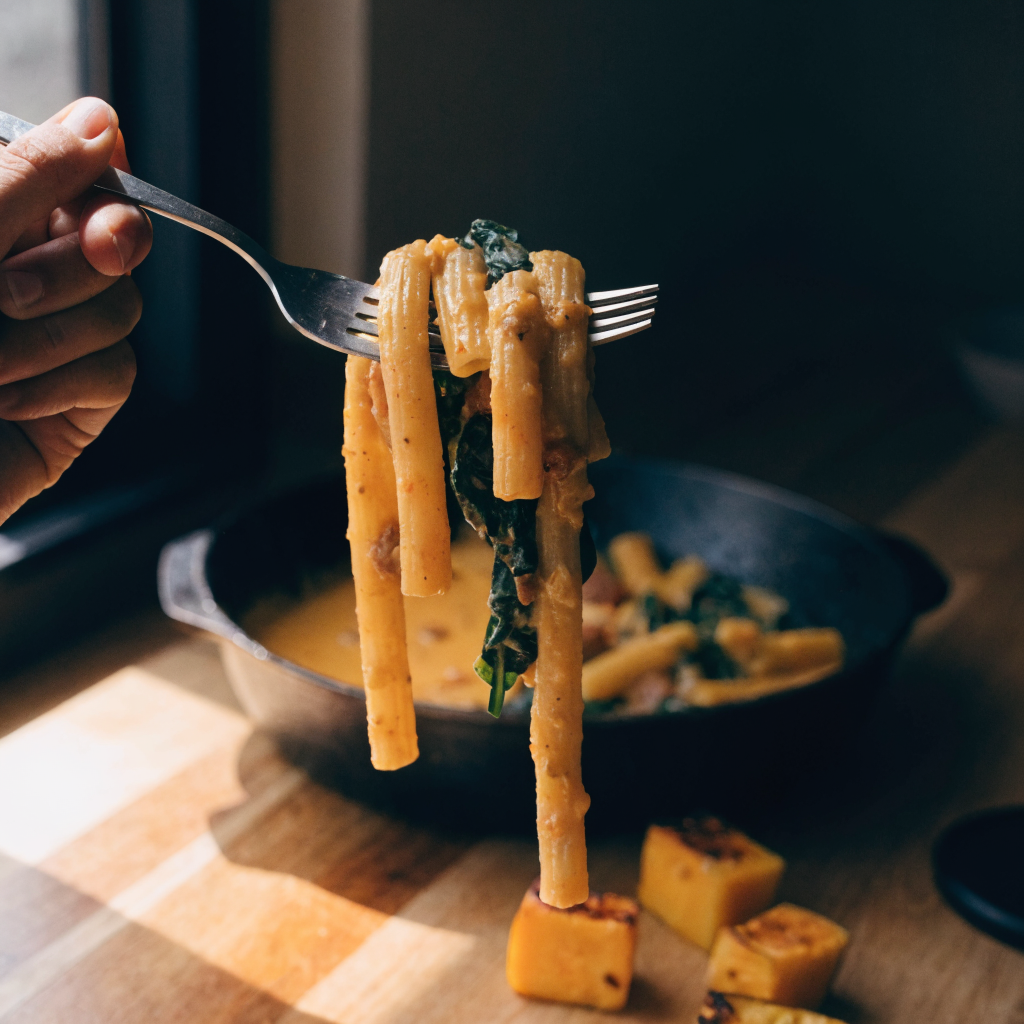
Butternut Squash Pasta with Sausage and Spinach
Ingredients
Equipment
Method
- Preheat oven to 425°F. Cut squash in half; dice half into 1-inch cubes, toss with 1 tablespoon olive oil and a pinch of salt, and spread on a rimmed sheet pan. Roast until caramelized at edges, 25–30 minutes. Reserve 1 cup of roasted cubes for blending and the remainder for finishing.
- Cut remaining squash into larger chunks and place in a medium saucepan with 1 cup chicken broth and a pinch of salt. Simmer until very tender, about 15 minutes; drain, reserving ½ cup cooking liquid, and transfer to a blender.
- In the blender combine the simmered squash, 1 cup roasted cubes, 2 tablespoons olive oil, shallot or grated onion, garlic, and ¼ cup of the reserved cooking liquid. Blend until smooth and creamy, adding more reserved liquid or pasta water in small amounts to reach a thick, pourable consistency. Season lightly with salt and pepper.
- Bring a large pot of water to a boil and salt generously. In a 12-inch skillet over medium-high heat, add 1 tablespoon oil and the sausage. Brown without stirring for 2–3 minutes, then break up and continue browning until deeply colored, about 6–8 minutes. Transfer sausage to a plate lined with paper towels, leaving about 1 tablespoon fat in the pan.
- Add the diced onion to the skillet and cook over medium heat until translucent, 4–5 minutes; add minced garlic and cook 30 seconds until fragrant.
- Return the browned sausage to the skillet, pour in ½ cup chicken broth to deglaze, and scrape up browned bits. Lower heat and stir in the blended squash sauce, warming gently—do not boil. Meanwhile cook pasta until al dente according to package instructions, reserving 1 cup pasta water before draining.
- Add drained pasta to the skillet along with 4 cups baby spinach and ¼ cup grated Parmesan. Toss and add reserved pasta water a few tablespoons at a time until sauce clings to the pasta (about 2–6 tablespoons usually, up to ½ cup if needed). Adjust salt and pepper, finish with lemon juice if using, and fold in the remaining roasted squash cubes for texture.
- Divide pasta among bowls, sprinkle with extra Parmesan if desired, and serve immediately.
Notes
Frequently asked questions
Can I use frozen butternut squash? Yes—thaw and drain frozen squash, then roast briefly to remove extra moisture before using; frozen squash is an easy, budget-friendly option.
What sausage can I use if I avoid pig-based products? Use turkey or chicken Italian-style sausage or remove casings from links and brown the meat; you can also season ground poultry with fennel and paprika to mimic the sausage flavor.
Is this pasta freezer-friendly? Freeze the blended squash sauce only—up to 3 months—not the cooked pasta; thaw the sauce overnight in the fridge and reheat gently before tossing with freshly cooked pasta.
How do I stop the sauce from becoming greasy? Brown the sausage thoroughly and drain excess fat, leaving only about 1 tablespoon in the pan; deglaze with broth and add the squash sauce slowly so the emulsion holds.
Can I make this vegetarian? Yes—replace the sausage with cooked lentils or sautéed mushrooms and add smoked paprika or fennel seed to mimic the savory notes; use vegetable broth instead of chicken broth.
Closing
This butternut squash pasta balances roasted sweetness, savory sausage, and bright spinach in a creamy, stove-to-table meal that’s suited to cool evenings; the roasting-plus-simmering approach keeps the sauce silky and flavorful, and it makes a satisfying family dinner I return to every fall. Leftovers reheat well with a splash of water or broth, and the blended sauce freezes nicely so you can enjoy the same technique on a busy weeknight.
Leave a Reply