
I made my first rhubarb pie after someone at work handed me a bag of rhubarb from their garden and said, “You’ll figure it out.” I had no idea what I was doing. I remember biting into that first slice and immediately realizing I had under-sweetened it so badly it almost made my face twist. Still ate it though.
After a few tries, I landed on this version that actually tastes like something you’d want to serve at a family table without apologizing for it.
Why This Recipe Works
Rhubarb is tricky because it behaves like a fruit but tastes like it forgot to add sugar. If you don’t balance it properly, the pie ends up aggressively tart or watery.
What fixed it for me was two things: pre-cooking part of the rhubarb with sugar to control moisture, and using just enough thickener so the filling sets instead of turning into soup when sliced. The crust also matters more than people think—too thin and it collapses, too thick and it overpowers everything.
Ingredient Notes
Fresh rhubarb is the only version I fully trust for this pie. Frozen rhubarb releases too much water unless you drain it aggressively.
I use a mix of granulated sugar and a little brown sugar because plain white sugar alone tastes flat.
Cornstarch works better than flour here. Flour makes the filling look cloudy and heavy.
Cold butter in the crust is non-negotiable. I’ve tried shortcuts. They don’t end well.
How to Make It
Start with the pie crust. Mix flour, salt, and cold butter until the texture looks like rough crumbs with some pea-sized bits still visible. Add ice water slowly until it just comes together. Don’t overwork it or you’ll end up with a tough crust instead of a flaky one. Chill it while you prepare the filling.
For the filling, chop rhubarb into small even pieces. Toss it with sugar, cornstarch, vanilla, and a pinch of salt. Let it sit for a bit so it starts releasing juice. This step helps the final texture stay consistent instead of watery in spots.
Roll out the bottom crust and place it in the pie dish. Add the rhubarb filling and spread it evenly. It will look like a lot, but it shrinks down while baking.
If you’re doing a top crust, lay it over and cut vents so steam can escape. I’ve skipped this before and ended up with bubbling filling leaking through the sides.
Bake until the crust is golden and the filling is visibly bubbling in the center, not just the edges. That bubbling part matters—it’s how you know the thickener has activated properly.
Let it cool completely before slicing. I know it’s hard. Cutting it early turns it into a runny mess.
Things I Learned the Hard Way
Undercooking rhubarb pie is the most common mistake. If the center isn’t bubbling, it’s not done.
Too much sugar actually kills the flavor. You want balance, not candy.
I once skipped chilling the crust and regretted it immediately. It shrank and pulled away from the filling.
Also, don’t expect clean slices right away. This pie needs time to set properly.
Storage & Serving Suggestions
Store rhubarb pie covered at room temperature for 1 day or in the fridge for up to 4 days.
It tastes best slightly warm or at room temperature. I usually reheat slices in the oven instead of the microwave so the crust doesn’t go soft.
Vanilla ice cream is the obvious pairing, but plain whipped cream works just as well if you want it lighter.
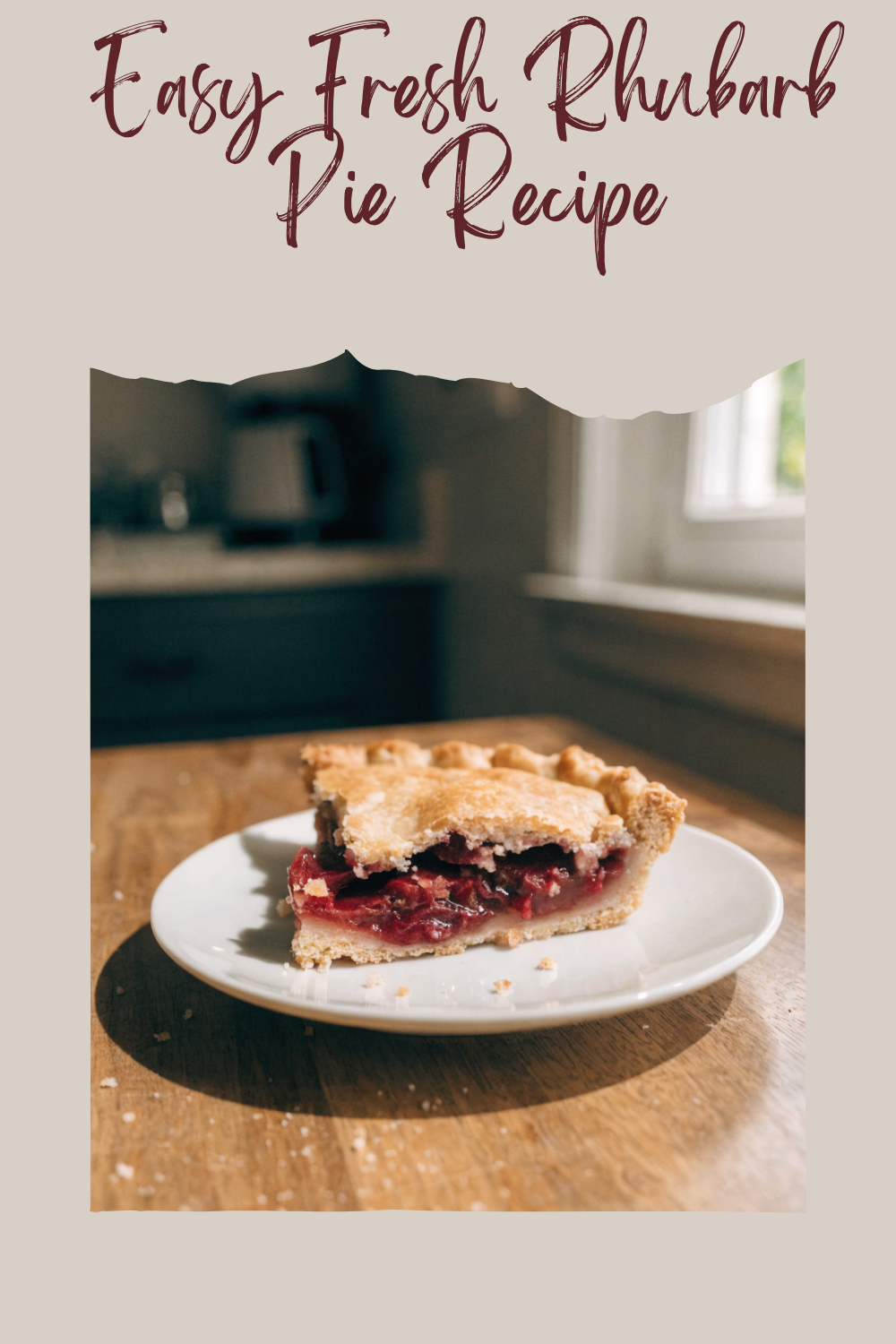

Easy Fresh Rhubarb Pie Recipe
Ingredients
Method
- In a bowl, mix flour and salt. Cut in cold butter until mixture resembles coarse crumbs.
- Add ice water gradually until dough forms. Divide, wrap, and chill for 30 minutes.
- Preheat oven to 375°F.
- Toss rhubarb with sugar, brown sugar, cornstarch, vanilla, and salt.
- Roll out half the dough and place into a 9-inch pie dish.
- Fill with rhubarb mixture evenly.
- Top with second crust, or lattice, and cut vents if fully covered.
- Bake for 50–55 minutes until crust is golden and filling is bubbling.
- Cool completely before slicing.



Leave a Reply