
On the first hot Saturday I tested this peach burrata salad, the kitchen smelled like stone fruit and basil; this is exactly the fresh, balanced lunch I wanted on a warm afternoon. I wanted a salad that highlighted ripe peaches and creamy burrata without turning the greens limp or the burrata watery, so I rebuilt the dressing and plating order until the textures stayed bright. If you like straightforward techniques and realistic portions, keep reading—this peach burrata salad is made for home cooks who want a dependable, balanced result.
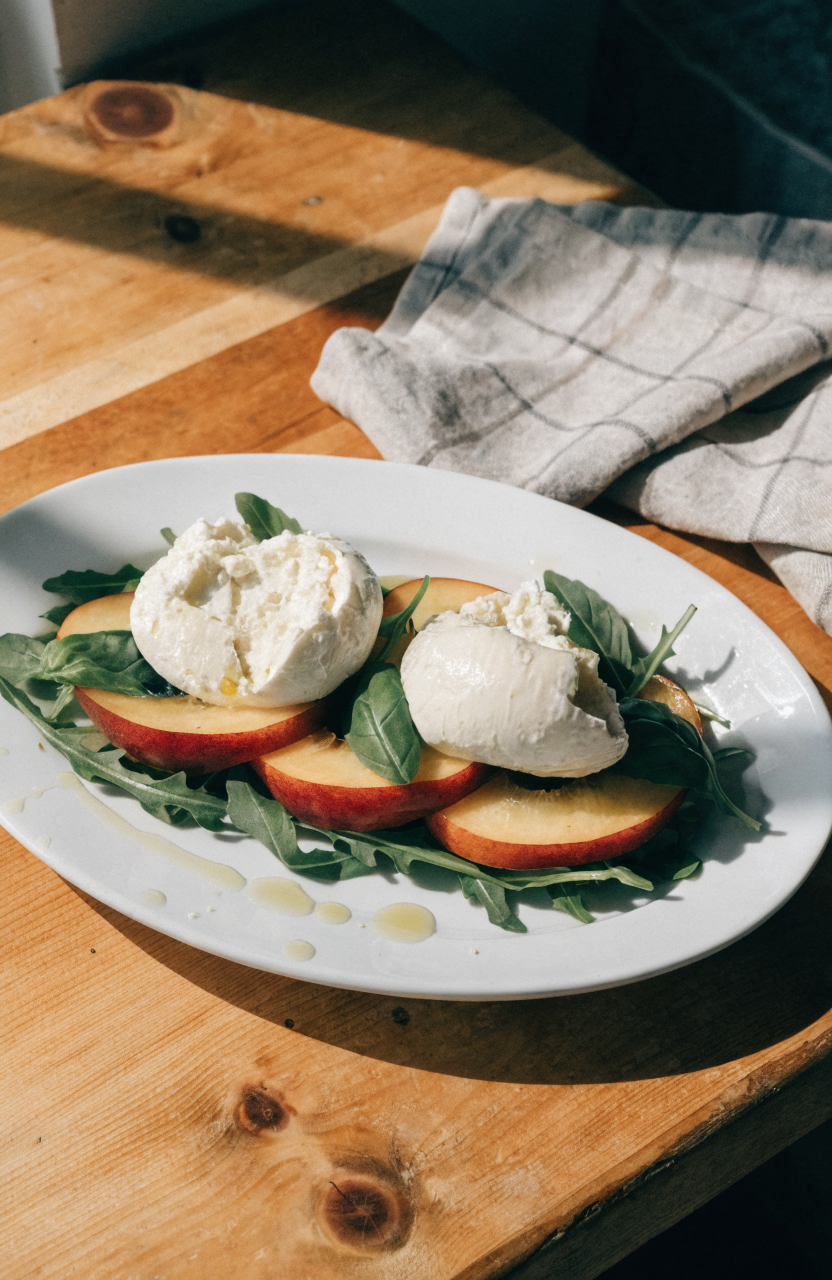
Why this peach burrata salad works
This peach burrata salad succeeds because it separates three things people often rush: fruit prep, cheese handling, and dressing timing. Burrata is luxurious but releases liquid if left too long with acidic dressing. Ripe peaches can be delicate and bruise, releasing juices that make arugula soggy. I tuned the ratio to roughly one ounce of cheese per serving, two peaches for a four-person platter, and a light vinaigrette that brightens without making the salad wet. During testing I first tossed everything together and wound up with puddles on the plate; the final method keeps the burrata tucked in at the last minute and the dressing lightly massaged into the fruit to concentrate flavor without adding excess moisture.
Key takeaways
- Prep fruit and cheese separately to control moisture.
- Use a restrained vinaigrette and dress the fruit, not the greens.
- Plate burrata last so it stays creamy, not watery.
Ingredients you’ll need and what to substitute
I use a mix of peppery baby arugula, two ripe peaches, and one 8-ounce ball of burrata for four servings. Extra-virgin olive oil and a good quality balsamic or balsamic glaze add the fat and sweet-tart contrast; lemon juice or a splash of white balsamic also works if you prefer a brighter acid. If peaches are underripe, you can substitute nectarines; they hold up a bit better and slice cleanly. For greens, baby spinach is a milder swap, but it will soften sooner so dress it at the last minute. If you want a nutty crunch, lightly toasted sliced almonds or pistachios add texture—sprinkle them on just before serving to keep them crisp.
Key ingredient notes:
- Peaches: Choose firm-yet-yielding peaches with a fragrant aroma; underripe fruit won’t have the same aroma and overripe fruit will be mushy.
- Burrata: Use fresh burrata from a refrigerated case; drain it on paper towels for 10 minutes before serving.
- Balsamic glaze: Optional for finishing—use sparingly to avoid over-sweetening the salad.
Equipment
You’ll need a few simple items: a sharp paring knife for slicing peaches, a medium bowl for the dressing, a rimmed sheet pan or large plate for arranging the salad, and a small skillet if you toast nuts. A Microplane or fine grater for lemon zest helps if you add zest to the dressing. If you have a small salad spinner, use it to dry the arugula thoroughly—excess water is the main reason salads go soggy.
- Salad spinner or large colander and towels
- Sharp paring knife
- Small mixing bowl for the dressing
- Rimmed sheet pan or large serving platter
How to make peach burrata salad
Prep and timing
Begin by rinsing and thoroughly drying the arugula; any leftover surface water will dilute the dressing and make leaves limp. Drain the burrata on paper towels for at least 10 minutes—this removes excess whey that otherwise pools on the plate. At the same time, slice the peaches thinly into half-moons about 1/4-inch thick. If the peaches are sticky or especially juicy, place the slices on paper towels to blot briefly.
Dressing and assembly
Whisk together 2 tablespoons extra-virgin olive oil, 1 tablespoon white balsamic vinegar or fresh lemon juice, 1 teaspoon honey, 1/4 teaspoon kosher salt, and a few grinds of black pepper. The goal is a light emulsion—enough to carry flavor but not soak the greens. Toss the peach slices with about 1 teaspoon of the dressing in a small bowl to coat; this concentrates the flavor on the fruit without soaking the arugula.
Arrange the arugula on a platter in a single loose layer. Scatter the dressed peach slices over the greens, spacing them so juices can be absorbed by the leaves rather than puddling. Gently break the drained burrata into two or three pieces and nestle them on top—adding the cheese at the end keeps its interior from leaking. Finish with a few thin shavings of lemon zest, a drizzle of extra-virgin olive oil, a light sweep of balsamic glaze (optional), and torn basil leaves.
Serving cues
Serve immediately. Look for glossy, but not wet, greens; firm peach slices that hold their shape; and burrata that has a pillowy exterior with a creamy interior that stays creamy on the fork without releasing a puddle of whey on the plate. If you see small beads of liquid on the plate, serve right away and blot any excess with a corner of a paper towel before plates are passed around.
Things I learned the hard way
- If the burrata leaks, it’s usually because I let it sit after breaking it; always break it at the last minute and drain it ahead of time.
- Underdressed peaches taste flat; a quick toss with a teaspoon of dressing wakes them up without adding excess moisture.
- Overly ripe peaches will make the salad syrupy—pick fruit that yields slightly to gentle pressure and smells sweet.
- Don’t dress the arugula directly—dressing the greens first makes them wilt quickly. Dress fruit or drizzle just a little over the finished salad.
- Toasted nuts add welcome crunch, but toast them in a dry skillet for 3–4 minutes until fragrant and cool them completely before adding so they stay crisp.
- First attempt mistake: I once skipped draining the burrata and the plate had an unappetizing pool of whey; draining and late addition fixed that completely.
Variations to try
- Stone fruit mix: Swap one peach for 6 halved cherries or sliced nectarines; reduce dressing slightly if cherries are particularly juicy.
- Herby twist: Replace basil with mint for a brighter note; increase lemon juice by 1/2 teaspoon to balance the mint.
- Grain bowl version: Serve the dressed peaches and torn burrata over cooked farro; warm the farro and toss lightly with 1 teaspoon olive oil to keep grains separate.
- Crunchy seed topping: Sprinkle 2 tablespoons toasted pumpkin seeds in place of nuts if avoiding tree nuts; no timing changes needed.
Storage, freezing, and reheating
This salad is best eaten immediately. Refrigerator storage: keep leftover components separate—store dressed peaches in an airtight container for up to 24 hours and undressed arugula in a dry container for up to 2 days. Burrata does not freeze well; do not freeze. If you must refrigerate an assembled plate, expect the arugula to soften and the burrata to release liquid; store leftovers covered in the fridge and consume within 24 hours. To refresh refrigerated leftovers, blot excess liquid, add a fresh drizzle of olive oil and a few torn basil leaves before serving.
What to serve with peach burrata salad
This salad pairs well with crusty bread to sop up any cream, a simple grilled chicken breast for added protein, or a chilled sparkling non-alcoholic spritzer. For a light lunch, serve alongside a bowl of chilled cucumber soup or herbed quinoa for a more filling plate.
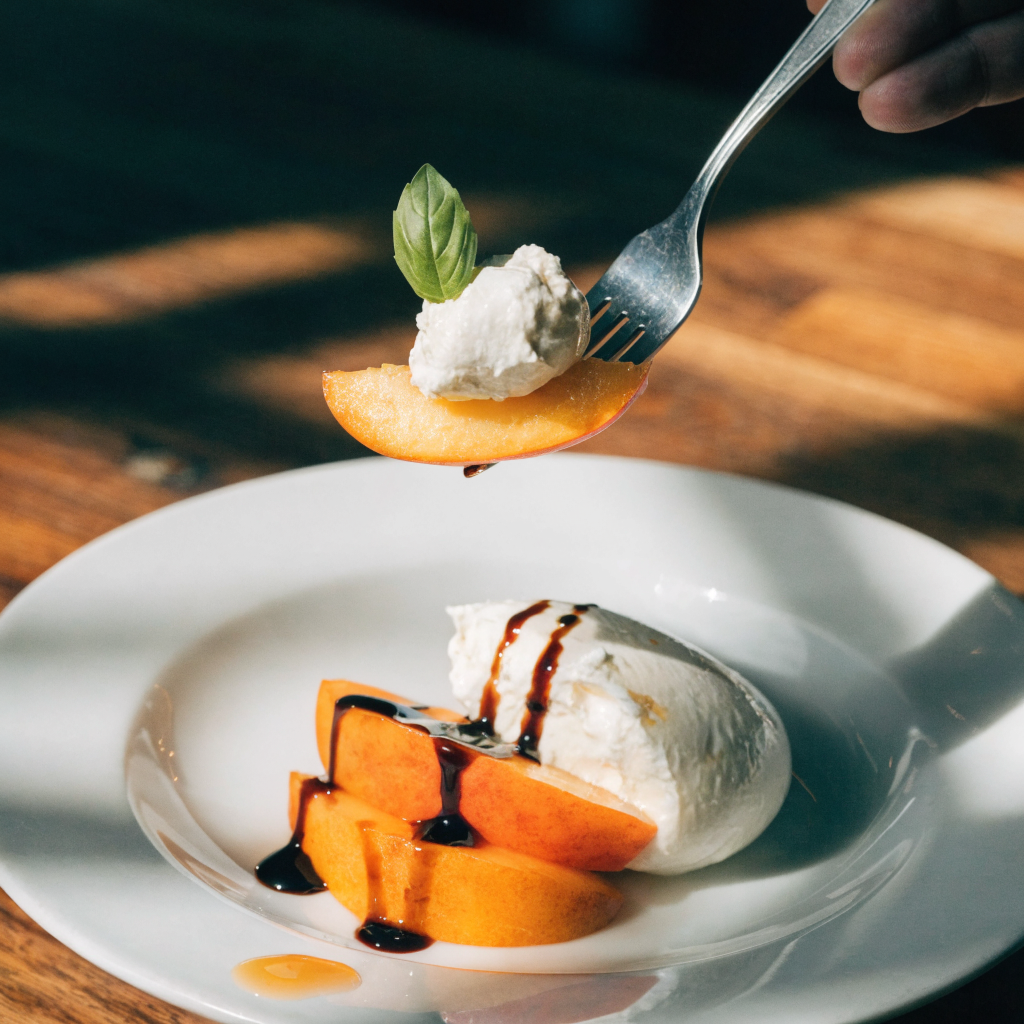
Peach Burrata Salad with Arugula and Balsamic Drizzle
Ingredients
Equipment
Method
- Rinse the arugula and spin or pat dry until no surface moisture remains; set aside in the refrigerator while you finish other steps.
- Place the burrata on a paper towel for at least 10 minutes to remove excess whey; thinly slice the peaches and blot particularly juicy slices with paper towels.
- Whisk together 1 tablespoon extra-virgin olive oil, 1 tablespoon white balsamic or lemon juice, 1 teaspoon honey, 1/4 teaspoon kosher salt, and a few grinds of black pepper until combined.
- Toss the peach slices with about 1 teaspoon of the dressing in a small bowl to coat lightly; arrange the arugula on a platter, scatter the dressed peaches over the greens, then gently nestle torn pieces of burrata on top.
- Drizzle the remaining tablespoon of olive oil and a light sweep of balsamic glaze over the salad if using; finish with torn basil leaves and toasted nuts, serving immediately.
Notes
Frequently asked questions
Can I make this ahead of time? Yes, you can prepare components up to a day ahead—keep greens, peaches, and burrata stored separately and toss together within an hour of serving to preserve texture. Pre-toss the peaches with a small amount of dressing if you want their flavor ready, but avoid dressing the arugula.
Why is my burrata watery? Burrata often sits in its own whey; draining it on paper towels for 10 minutes and breaking it only at the last minute prevents excess liquid from pooling on the plate.
Can I use frozen peaches? Fresh is best for texture; frozen peaches thaw to a soft, watery texture and will make the salad soggy. If frozen are your only option, drain them thoroughly and pat dry, then use them in a composed grain bowl rather than a delicate salad.
What if my peaches are underripe? If peaches are underripe, swap in nectarines or add 1 teaspoon honey to the dressing to compensate, and let the sliced fruit sit in the dressing for 5–10 minutes to soften slightly.
Is there a vegan substitute for burrata? A soft fresh vegan cheese can stand in, but textures will vary; you may need to reduce dressing slightly to prevent a watery plate. Refrigeration and plating timing advice remain the same.
Closing
This peach burrata salad is a simple, balanced way to enjoy summer fruit and creamy cheese with bright dressing and clear textural rules—drain the burrata, dress the fruit, and plate at the last minute for the best result. Serve with crusty bread or a light protein for a complete meal, and enjoy the seasonal flavors while peaches are at their peak.
Leave a Reply